Publication
The Noon Sirens invites Anaïs Duplan, Johanna Hedva and Lara Mimosa Montes to occupy Amant’s digital spaces ahead of and during SIREN (some poetics).
If SIREN (some poetics) recognizes the siren as both a warning of danger and the danger itself, The Noon Sirens acts as a precursor to this fact. While much has been said of the fluidity of digital space, it remains a deeply contested water. The Noon Sirens anticipates the trouble.
The artists and writers are invited to challenge the dominance of ‘universal’ languages, resist data’s absolutization of knowledge, where numbers speak for themselves and regress the violence of accelerated digital communication. Just as there is no neutral voice, there is no neutral space, and these artists consider the territories they occupy and what a de-colonization of the digital might be.
Johanna Hedva
Scream Demo
In the final installment of The Noon Sirens, Johanna Hedva gives over their Scream Demo (2021), a vocal piece that casts the body and its voice as an expression of the pleasure of refusal. Recorded in Hedva’s apartment during lockdown, the five-minute track is all voice, with minimal effects of reverb and delay. Layered into a sonic composition that moves through different registers, Scream Demo demonstrates Hedva’s range, technique, and stamina, as they swing between the antipodal styles of opera and P’ansori, pushing into the possibility of vocal cord damage.
In making this edge legible, and sometimes taking the body beyond it with all the attendant possibility of failure, Hedva invokes an inversion of normative Western values around what a voice should, and should not, sound like—and, ultimately, what it can be used for. Scream Demo is from a larger body of all-vocal work-in-progress that Hedva is currently making.
Lara Mimosa Montes
Whale Tongue
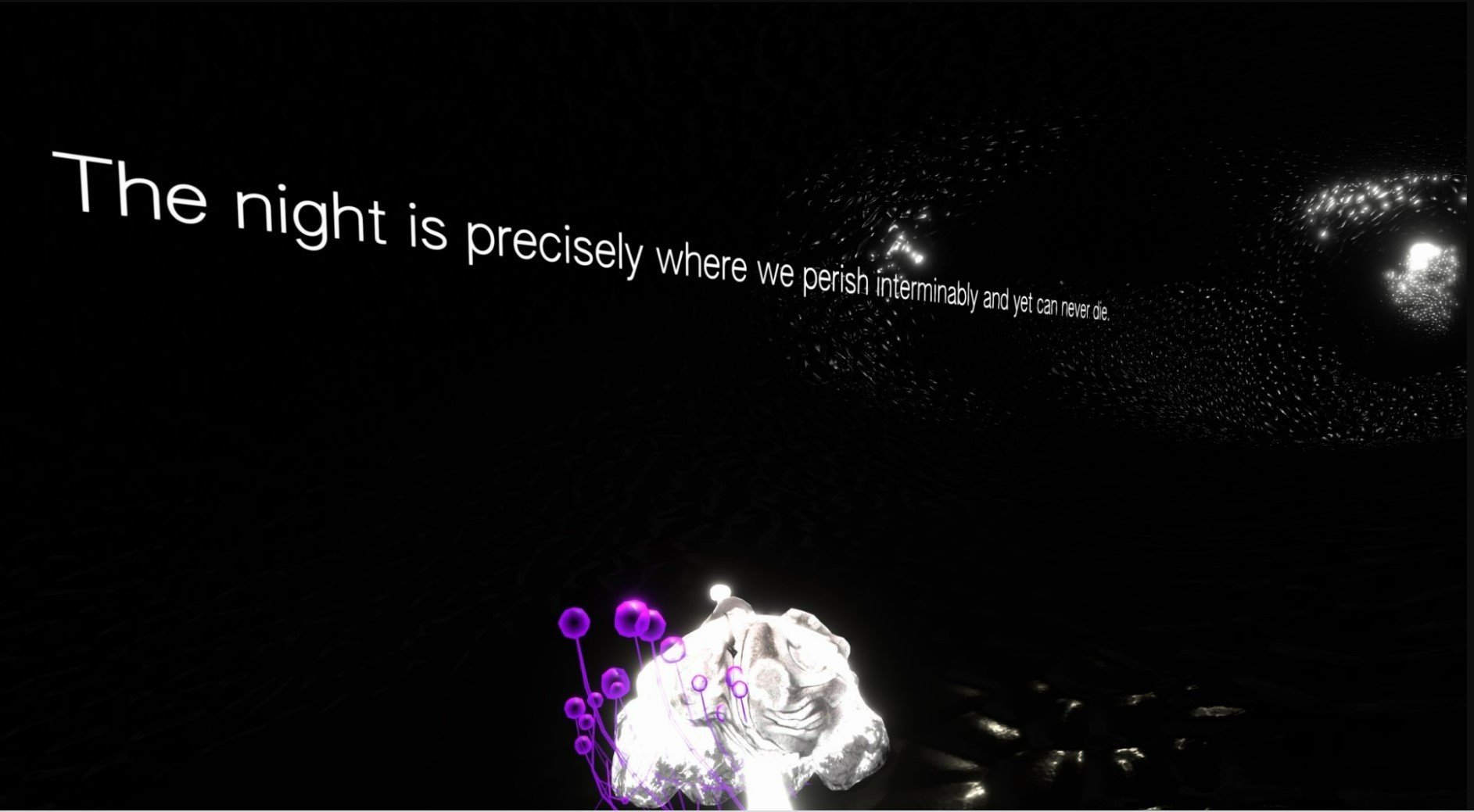
Commissioned specifically for The Noon Sirens project, Whale Tongue, is a work of ecstatic prose that traces the movements between being and non-being, presence, myth, soliloquy and uncertainty. Lara Mimosa Montes’ writing holds the reader in a liminal zone, feeling for borders and boundaries and exceeding their limits as only language can do.
SIREN (some poetics) observes that in the original Greek of the Odyssey, only a voice was referred to when the sirens sang to Odysseus and his crew. Never a body. The voice, disembodied, was alone a technology of cognition and knowledge. It was in the later tellings of this story that a body was constructed. Each body a projection, emanating from a sympathetic origin to lend legibility to the tale. It is still a constitutive act to build a body around speech. Each body still a projection of the power that shapes it.
The Noon Sirens considers how speech and language arrive online. Our avatars are a construction and a performance determined by the digital contexts that hold us and they are inevitably shaped in the image of the power that plays out in these territories. What would it mean to deny this enforced body? How to resist such inscription? In Lara Mimosa Montes’s text, that resides in the templated architecture of Amant’s website, we read a “transversal speech; sound without origin.” Transversal, from geometry, meaning a line that obliquely intersects - a line that breaks a regular system of lines. Whale Tongue is an experiment in obsession, excess, and arrhythmic self-annihilation.
Dismissive of the body this language is given, Whale Tongue gives shape to the space between bodies. The voice itself as cognition, as something physical, and with shape. Afterall, “This tongue is a sensory organ that sweats something viscous and thixotropic”.
This work was made possible in part with the support of Headlands Center for the Arts.
Anaïs Duplan
Out of Dark Noise
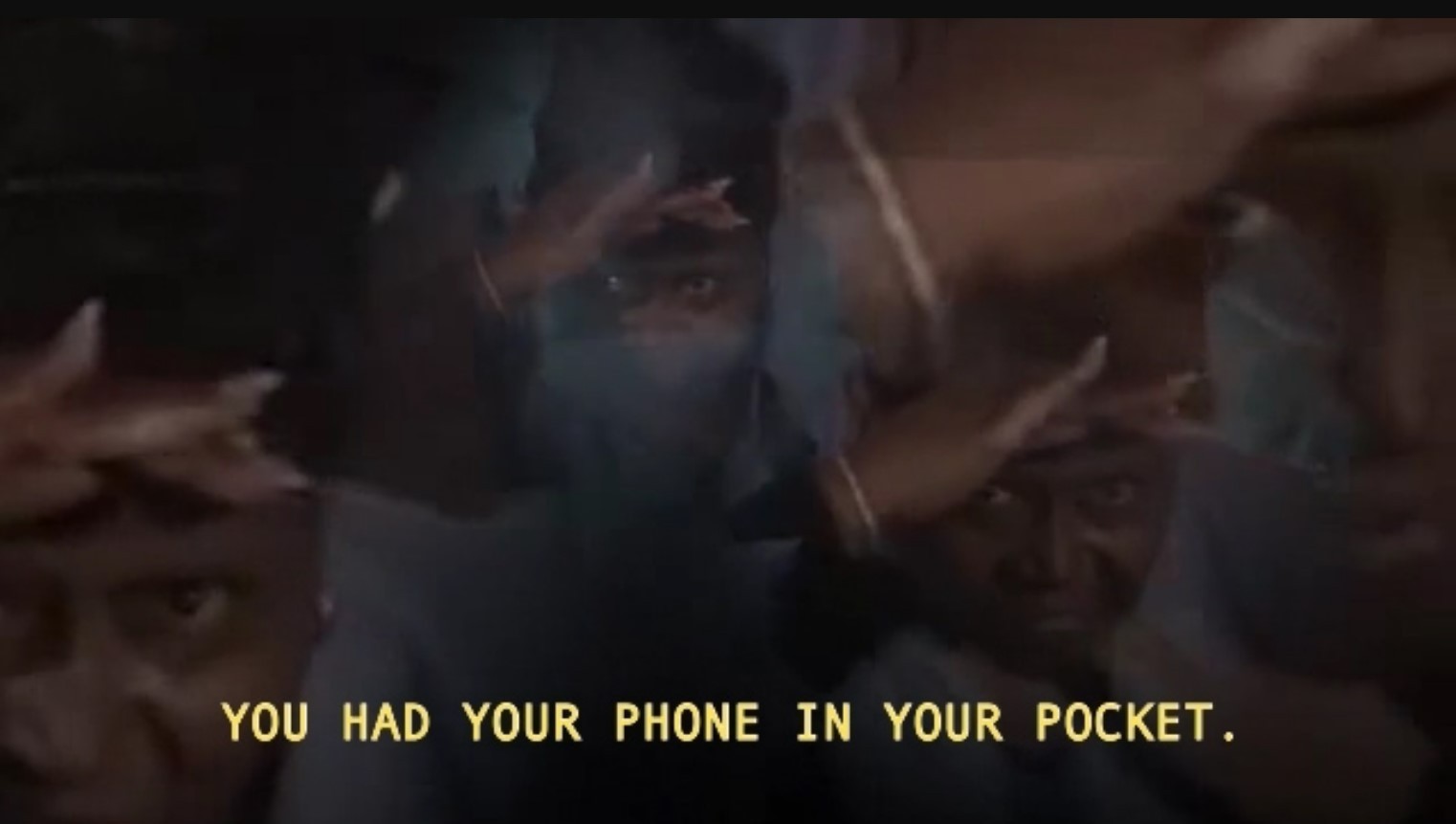
Out of Dark Noise is an online lecture performance on Black experimental documentary. Anaïs Duplan live narrates excavated and abstracted rap music videos, sometimes detached from their original audio and left isolated as visual media, as an ad hoc spoken commentary.
This interaction with archival videos draws on the historic and cultural specificity of the material but also integrates live commentary from the audience. This form of reading and being read attempts to make space for collectively reading the material for its affect and emotion, following a mode practiced by Édouard Glissant, Fred Moten, and Simone Wright.
By removing the original sound from the videos, Out of Dark Noise prompts a type of live poethics. Used by artists and writers such as Rhea Dillon and Joan Retallack, poethics speaks to an aesthetic of complexity and calls for taking responsibility for chance. The addition of an ‘h’ introduces an ethical dimension and thickens ‘poetics’, offering the possibility that art is a form of living in the world.
This performance aims to produce a site of relationality, feeling, and collective resonance. As a poethics it considers responsibility to and for the other as opposed to the traditionally forceful ethics of universal rules of community. Out of Dark Noise’s aftermath, as a silent visual collage, leaves space for continual reading and collective reflection over the duration of SIREN (some poetics).
This work was part of a live lecture performance by Anaïs Duplan that took place on Amant’s homepage on June 6, 2022.